
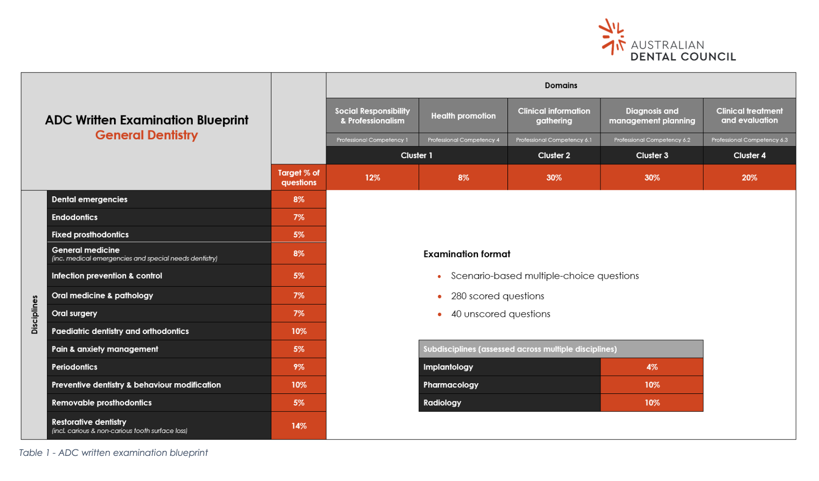
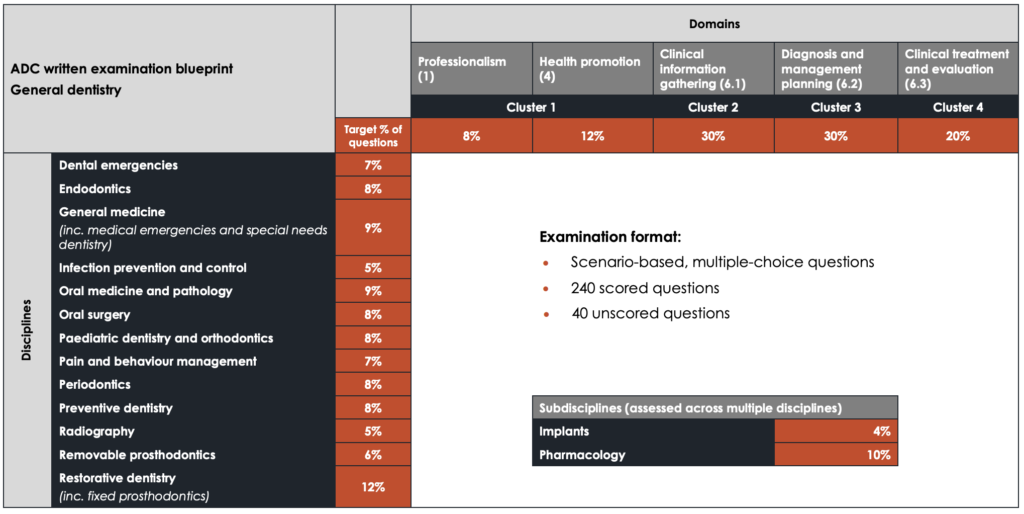
In September 2025, the Australian Dental Council (ADC) released a revised blueprint for the written examination. It wasn’t a dramatic overhaul. The format stayed familiar and most topics remained where candidates expected them to be.
Still, a closer look revealed something important. A few weightages had shifted.
These weren’t large changes, but they were meaningful enough to influence preparation. When the percentage of a discipline increases, even slightly, it often translates into more questions from that area in the exam.
That is why blueprint updates matter more than they appear to at first glance.
Soon after the announcement, the academic team at Winspert reviewed the revised blueprint carefully. Instead of waiting for the next exam cycle to reveal the pattern, the team decided to align their preparation resources immediately.
Radiology Now Carries Greater Weight
One of the noticeable changes in the updated blueprint involves radiology.
The subject’s weightage increased from 5% to 10%, effectively doubling its representation in the exam. Radiology has always been part of ADC assessments, but this increase suggests that image interpretation may now appear more frequently in written exam scenarios.
Radiology questions in the ADC exam rarely test theory alone. More often, they require candidates to interpret X-rays quickly and connect what they see with a clinical situation. That skill takes practice.
How Winspert Adapted
To reflect the increased importance of radiology, Winspert expanded its preparation material in this area. Several new resources were added for students preparing for the written exam.
These included:
- Three dedicated radiology mock examinations focused on X-ray interpretation
- Daily practice questions involving radiographic analysis
- Exercises designed to improve pattern recognition
- Timed practice sessions to help candidates interpret images efficiently
The goal was to help students become comfortable reading radiographs under exam conditions.
Behavioural Science and Anxiety Management
Another area receiving greater attention in the updated blueprint is behavioural dentistry, particularly anxiety management.
Dentistry involves more than technical procedures. Patient communication, behavioural understanding, and managing dental anxiety are part of everyday clinical practice. The ADC exam increasingly reflects this reality.
Questions related to behavioural science often appear as scenarios. A patient may refuse treatment, express fear, or misunderstand instructions. The candidate must identify the most appropriate professional response.
Winspert’s Approach
To prepare students for this shift, Winspert introduced several learning initiatives focusing on behavioural concepts.
These included:
- Dedicated HOT Notes covering behavioural science and anxiety management
- Public educational sessions discussing topics such as cognitive dissonance in dentistry
Scenario-based discussions linking behavioural theory to exam-style questions
By approaching the topic through real clinical situations, students were able to understand how these concepts are tested in the ADC exam.
Restorative Dentistry and Fixed Prosthodontics
Restorative dentistry remains one of the central pillars of the ADC written examination. The updated blueprint continues to emphasise this discipline, particularly in areas related to treatment planning, restorative materials, and clinical decision-making.
Candidates preparing for the exam usually encounter questions involving:
- restoration selection
material properties
management of failed restorations
prosthodontic planning - Because of its clinical relevance, restorative dentistry is rarely tested through simple recall questions. Instead, the exam often presents clinical scenarios requiring careful reasoning.
Winspert’s Preparation Resources
In response to the blueprint’s emphasis, Winspert expanded its study material for restorative dentistry and fixed prosthodontics.
Students were provided with:
- Dedicated HOT Notes focusing on restorative dentistry and FPD
- Condensed summaries of high-yield concepts
Coverage of ADC-relevant clinical guidelines
Reviews of commonly tested exam patterns
These materials were designed to help candidates revise complex topics efficiently while focusing on concepts most likely to appear in the exam.
Professionalism Cluster: A Notable Increase
Perhaps the most important structural adjustment in the blueprint involves the Professionalism cluster.
Its weightage increased from 8% to 12%, making professionalism a more prominent component of the written examination.
Professionalism in dentistry includes ethical decision-making, patient confidentiality, informed consent, and appropriate communication in challenging situations.
These topics are usually tested through case-based questions. Instead of asking candidates to recall definitions, the exam presents practical dilemmas and asks which response reflects professional standards.
Winspert’s Response
Recognising the increased importance of professionalism, Winspert introduced several updates to its preparation framework.
Among them:
- Professionalism added as a separate subject within UAF Volumes 1 and 2
- Dedicated professionalism sections included in HOT Notes
Cluster-wise mock examinations featuring professionalism scenarios - Question sets based on realistic ADC-style ethical dilemmas
This allowed students to practise analysing situations they might encounter in the exam rather than simply memorising guidelines.
Extended Validity of the ADC Written Examination
This update in the handbook has also given candidates a major respite by extending the validity of the ADC Written Examination. Previously, a passed written exam was valid for three years, but from March 2026 onwards, the validity will be extended to five years. This change gives international dentists more time to prepare for and complete the practical examination stage.
Preparing Students According to the Updated Blueprint
When examination blueprints change, preparation strategies must adapt accordingly.
Studying from outdated patterns can lead candidates to spend valuable time on areas that may no longer carry the same weight in the exam.
After reviewing the September 2025 update, Winspert adjusted several components of its preparation system to align with the new blueprint:
- teaching modules
mock examinations - daily practice exercises
- HOT Notes and revision material
- cluster-based practice tests
The intention was to ensure that students preparing with Winspert are studying in line with the current ADC exam blueprint, not the previous one.
For complete details and the latest updates, candidates are advised to refer to the official ADC Written Examination Handbook available on the Australian Dental Council website:https://www.adc.org.au/files/assessment/handbooks/ADC_Written_Examination_Handbook_for_General_Dentistry.pdf ” (The Australian Dental Council)
Why These Changes Matter for Candidates
For many ADC candidates, preparation can take months. During that time, small blueprint adjustments can quietly influence the distribution of questions in the exam.
Institutes that track these changes closely can update their teaching material early, helping students focus on the right topics.
That was the approach Winspert followed after the September 2025 update.
Because ultimately, preparing for the ADC written examination is not only about how much a candidate studies. It is also about whether that preparation matches the exam’s current expectations.
And staying aligned with those expectations can make a real difference on exam day.